
Our operating context
THE GLOBAL POSITION OF FERROCHROME Elements influencing the global demand for and pricing of ferrochrome:
|
OUR COMPETITIVE ADVANTAGE
|
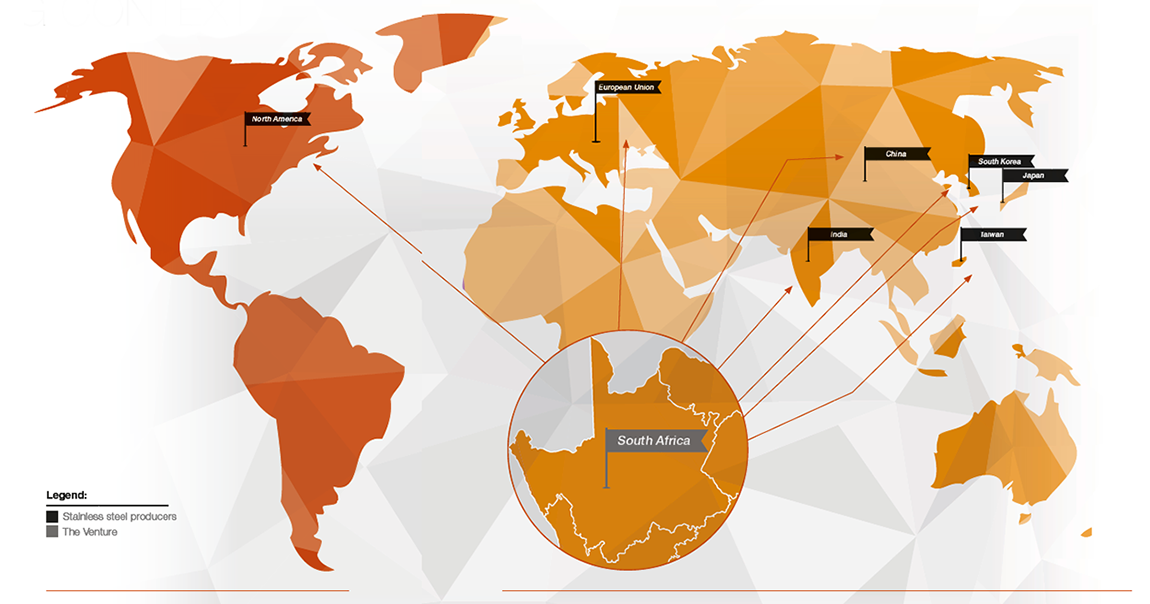
Ferrochrome production and its role in stainless steel
Produced by high-temperature reduction (smelting) of chromite, ferrochrome contains iron, chrome, minor amounts of carbon and silicon, and impurities such as sulphur, phosphorous and titanium.
Chrome is a metallurgical marvel. It brings critical properties to the metals with which it is alloyed. Add it to carbon steel in the form of ferrochrome and the steel becomes ‘stainless’ – corrosion resistant, mechanically strong, heat resistant, hard wearing, shiny and glamorous. Stainless steel is used almost everywhere in modern life from nuclear reactors to exhaust pipes, architecture, kitchenware and a host of other applications.
Specialty steels produced for applications such as tools, injection moulds, camshafts, etc also derive the high mechanical strength, hardness and heatresistance required from their chrome content.
Key statistics for 2018
- Global ferrochrome production increased from 12.6 million tonnes in 2017 to approximately 13.4 million tonnes in 2018.
- Ferrochrome demand increased from 12.2 million tonnes in 2017 to 13.1 million in 2018.
- South Africa produced approximately 3.9 million tonnes of ferrochrome in 2018.
- China imported approximately 14.3 million tonnes of chrome ore in 2018, with South Africa accounting for 10.9 million tonnes of imports into China.
SOUTH AFRICAN CHROME INDUSTRY
|
Challenges faced by South African ferrochrome producers
- Increasing production costs
- electricity
- labour
- Socio-political challenges
- Legislative uncertainty
- Commodity prices and demand
- Chrome ore exports
- Electricity supply
 For more information on ferrochrome production, consumption stainless steel
production and chrome ore imports, see the CEO's strategic review
and Key market indicator's.